


Agricultural drones are moving beyond being a specialist piece of technology and becoming a practical tool for farmers and contractors across New Zealand. From spraying and spreading to mapping and property management, these platforms are helping rural businesses approach everyday challenges in new ways.
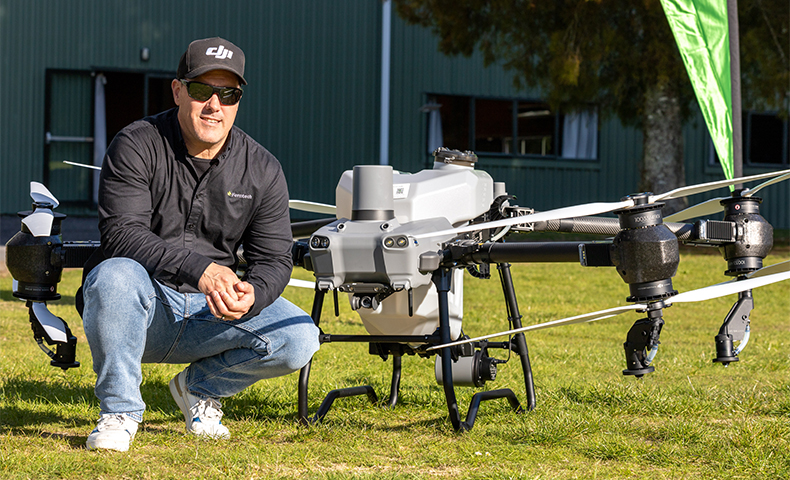
Ferntech’s Agricultural Drone Lead, Travis Watkins, recently joined the Countrywide Connect broadcast to discuss how agricultural drones have evolved, where they are being used today, and why they are becoming another valuable tool for New Zealand farming operations.
How Agricultural Drone Adoption Is Growing in New Zealand
Having worked with farmers, contractors, and rural businesses at Ferntech for more than four and a half years, Travis has seen significant changes in how the industry views drone technology.
What was once considered emerging technology is now becoming a practical option for businesses looking to improve efficiency, access difficult areas, and complement existing equipment.
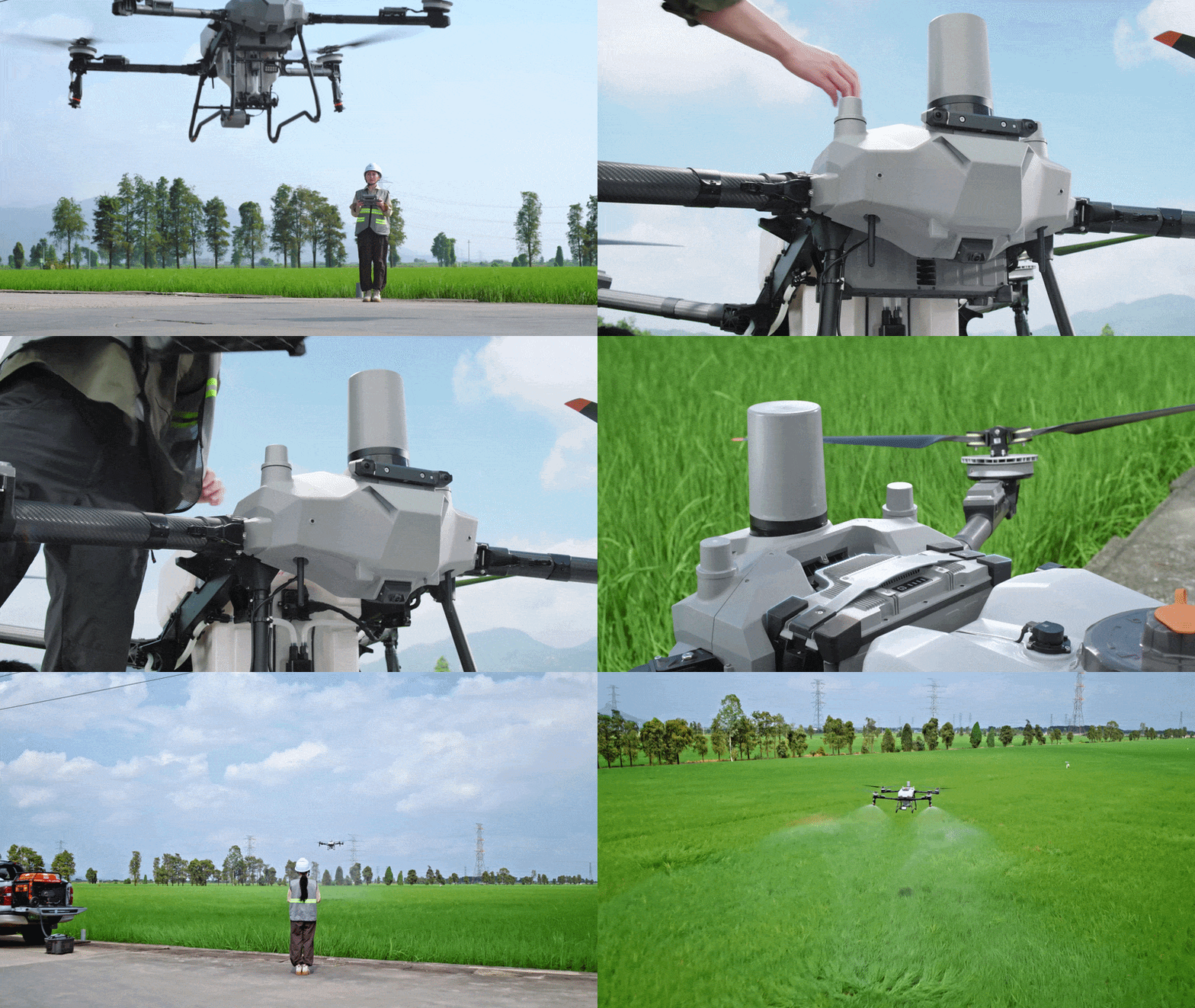
Modern agricultural drones have progressed significantly from earlier surveying and mapping applications. Today’s platforms combine larger payload capacities, improved automation, and more precise application systems, allowing them to take on a wider range of tasks across farms and rural properties.
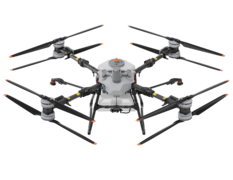
Heavy-lift platforms such as the DJI Agras T70P demonstrate how far the technology has progressed, providing farmers and contractors with a dedicated solution for high-capacity spraying and spreading applications.
Beyond Spraying: Expanding Uses Across the Farm
When people think of agricultural drones, spraying is often the first application that comes to mind. However, as Travis explained during the Countrywide Connect interview, the technology is being used for much more than chemical application.
Agricultural drones are helping farmers and contractors with tasks including:
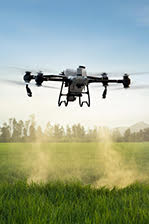
Spraying and spreading: Applying agrichemicals, fertiliser, and other inputs across areas where traditional equipment may be difficult to use.
Property monitoring: Checking remote water troughs, fence lines, and other areas of a property without needing to travel across every paddock.
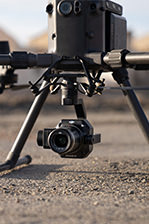
Mapping and surveying: Capturing information about paddocks, boundaries, and areas that require closer inspection.
Livestock management: Supporting mustering and monitoring in difficult terrain where accessing areas by traditional vehicles may be challenging or unsafe.
While these applications continue to expand, Travis emphasised that drones are not designed to replace existing farming equipment.
Agricultural drones are designed to work alongside tractors, quad bikes, and contracted aerial services, giving farmers another option when conditions, terrain, or timing make traditional methods difficult.
The Shift From Flying to Mission Planning
One of the biggest changes in agricultural drone operations is the role of the operator.
A common misconception is that flying a large agricultural drone requires constant manual control throughout the entire operation. In reality, much of the work happens before the aircraft leaves the ground.
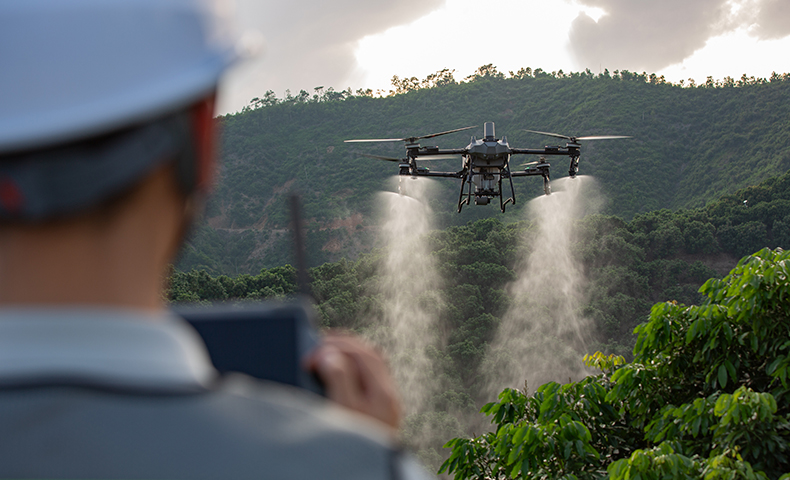
Operators plan missions by mapping the work area, setting application requirements, and allowing the software to calculate the most efficient flight path. Once the mission is confirmed, the drone can complete the programmed route automatically while the operator monitors the operation.
As Travis explained during the interview, modern agricultural drone pilots are less focused on manually flying every movement and more focused on planning, supervision, and ensuring the operation runs safely. If conditions change or an unexpected issue occurs, the operator can pause the aircraft immediately and take control when required.
Operating Agricultural Drones in New Zealand
While smaller drones can be operated under simpler rules, heavy-lift agricultural drones require operators to meet additional aviation requirements.
Commercial agricultural drone operations in New Zealand involve appropriate training, certification, and operating procedures. Depending on the type of operation, this may include:
• Civil Aviation Authority (CAA) Part 102 certification and operating procedures
• Pilot certification
• Relevant agricultural qualifications
• Chemical handling qualifications where required
Maintaining visual line of sight is also a key requirement, ensuring the operator can monitor the aircraft and surrounding airspace throughout the operation. These requirements help ensure agricultural drones are operated safely and responsibly as their use continues to grow across the primary sector.
Experience Agricultural Drone Technology at Our Demo Days
Agricultural drones are becoming an increasingly practical tool for New Zealand farmers and contractors, providing another option for improving efficiency, accessing challenging areas, and managing farm operations.
To help farmers see this technology in action, Ferntech is hosting two free DJI Agras T70P Demo Days in August 2026.
These events provide an opportunity to see the DJI Agras T70P operating in real-world conditions, learn how agricultural drones are used for spraying, spreading, and mapping, and speak directly with the Ferntech Agriculture Team. The days will include presentations, live flight demonstrations, practical mapping sessions, and walkthroughs of automated mission planning.
Upcoming DJI Agras T70P Demo Days:
• Rotorua: 12 August 2026 at Tui Ridge Park
• Christchurch: 26 August 2026 at Living Springs Camp & Conference Centre